


While reading free newspapers, scrolling through the smartphone feed or watching the evening news on the sofa, we are too often confronted with shocking images of disasters. Disasters that turn people's lives upside down in the blink of an eye.
The international children's rights organization Save the Children is one of the first on the scene in such situations. With decades of experience in emergency aid and working in 120 countries, it is one of the largest humanitarian organizations in the world. And its helpers repeatedly encounter fates that leave no one indifferent.
Naomi* (6) has been living with her family in temporary accommodation in Indonesia since her home was destroyed by the earthquake at the end of September.
Save the Children responds to more than 100 emergencies every year. Be it environmental disasters, disease outbreaks or refugee movements. A few weeks ago, for example, Save the Children was on the scene when an earthquake and subsequent tsunami caused unimaginable damage on the Indonesian island of Sulawesi. 500,000 people were suddenly affected by the consequences - including 260,000 children.
Offering children protection is one of Save the Children's core tasks. This is because children are often separated from their relatives in the chaos following a natural disaster and need special protection. "Many children sleep on the street because they simply have nowhere to go. Many are full of fear and also severely traumatized. No child should ever have to go through this kind of experience." reports Zubedy Koteng, child protection expert from Save the Children who was on the ground in Indonesia. In these situations, Save the Children, through its local partner organization, sets up so-called child-friendly spaces where children are protected and can play. In the first four weeks after the earthquake, Save the Children set up more than 10 child-friendly spaces in Indonesia to offer affected children a place where they can simply be children again and be cared for. But then the biggest challenge begins ...
"Children must be reunited with their families as quickly as possible. This is a top priority and requires careful coordination between aid organizations, authorities and the government"Koteng continues. Reuniting unaccompanied children with their families is a focus of Save the Children's work.
Rizky's story
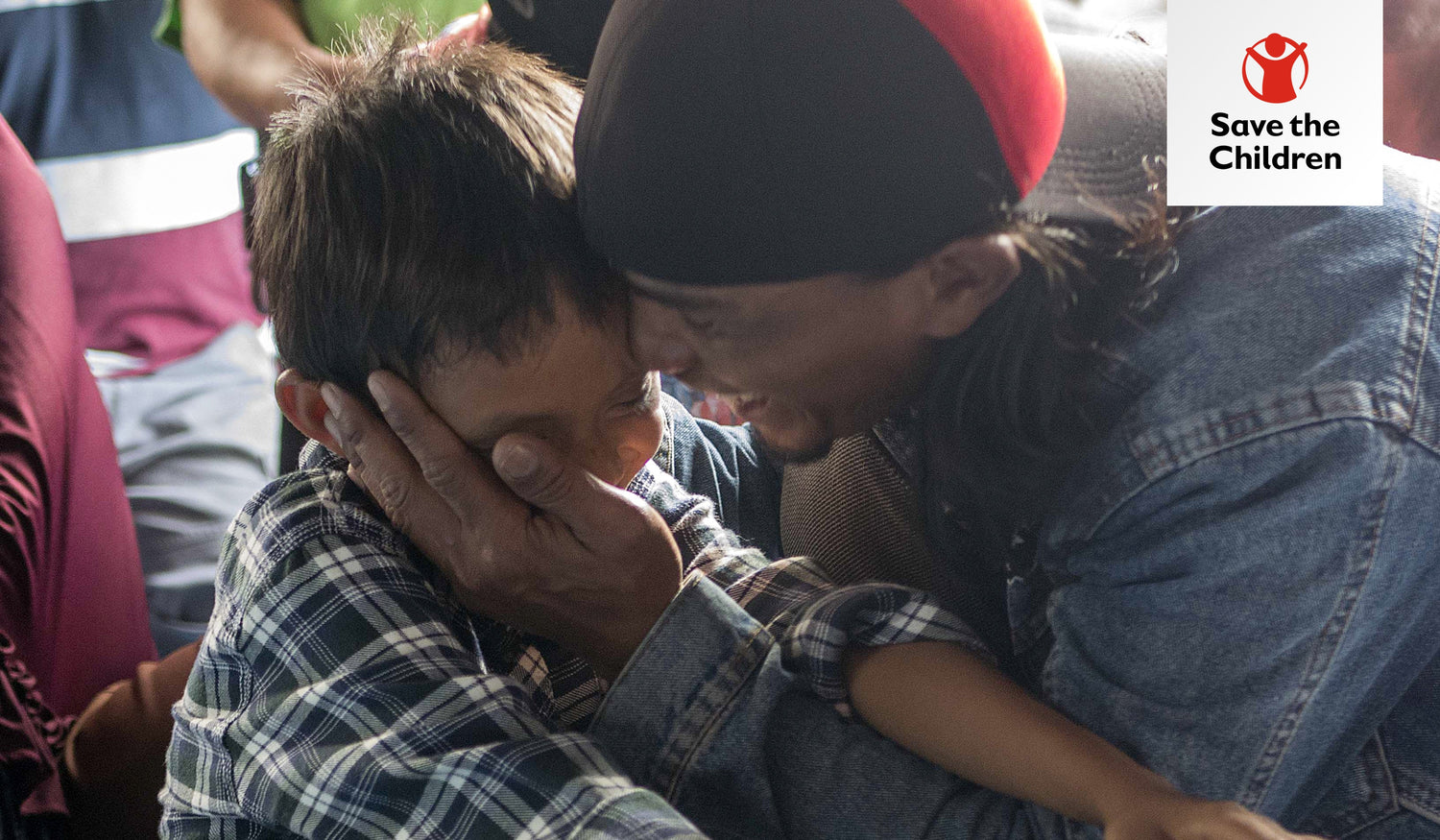
In addition to all the tragedies that such a disaster brings with it, there are fortunately also stories that give hope. One of these is the story of Rizky* (7), who was separated from his family in the earthquake. Volunteers discovered the little boy among the rubble after the earthquake and subsequently registered him with the local social authorities.
After two weeks of uncertainty and anxiety about whether he would ever see his family again, Rizky received the news he had been hoping for. Thanks to the systematic tracing and reunification work of Save the Children's local partner organization, Rizky's father and grandmother were identified. Rizky was incredibly relieved when he was released from Save the Children's care into the arms of his family. It was an overwhelming moment for everyone involved.
Learn more about the work of Save the Children and the current situation in Indonesia here
Stadtlandkind and Save the Children - a strong team for children
Stadtlandkind and Save the Children work together to give children a better future. For example via https://www.kidis.ch/2ndfashionthe platform for second-hand fashion from Stadtlandkind. There, customers have the opportunity to donate their proceeds to Save the Children. During this year's Christmas season, Stadtlandkind is also offering products as "Special Edition", part of the price of which will be donated to Save the Children to support children like Naomi* and Rizky*.
* Names changed to protect the privacy of the children
Nina Bissig, Partnership Manager Save the Children

